Cute Eco Bunny Clipart Save the Earth: Integrating Sustainable Design into Educational and Creative Workflows
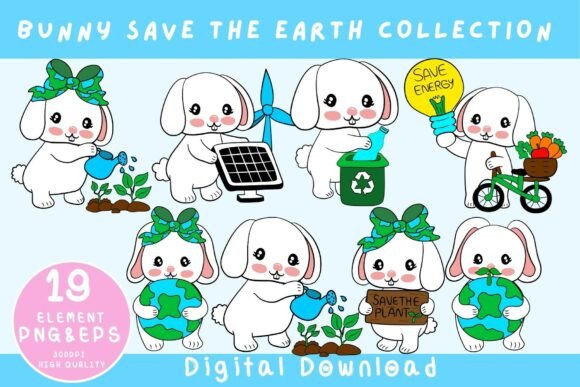
Visual communication plays a pivotal role in how audiences, particularly younger learners, engage with complex topics like environmental sustainability. When designing educational materials or marketing assets for green initiatives, the challenge often lies in balancing serious messaging with approachable aesthetics. The Cute Eco Bunny Clipart Save the Earth collection serves as a functional design asset within this workflow, bridging the gap between ecological education and visual engagement. Rather than being merely decorative, these vector-based illustrations act as cognitive anchors that help structure information, guide user attention, and soften the tone of instructional content regarding recycling, energy conservation, and planting.
For educators, content creators, and small business owners, integrating this clipart set requires a strategic approach to file management and design consistency. Understanding the technical specifications and practical applications of these assets ensures they enhance rather than clutter your final output. This article explores how to effectively implement these resources across various stages of project planning, execution, and distribution.
Pre-Project Planning and Asset Organization
Before opening any design software, efficient asset management is essential for maintaining workflow velocity. The Cute Eco Bunny Clipart Save the Earth set includes both PNG and EPS formats, each serving distinct purposes in the production pipeline. Organizing these files correctly at the outset prevents bottlenecks during the creative phase.
- Vector Assets (EPS): These should be stored in your master design library. Because they are infinitely scalable without quality loss, EPS files are the primary source for print materials like posters, banners, and textbook covers. They allow you to recolor elements to match specific brand palettes or classroom themes without degrading resolution.
- Raster Assets (PNG): With transparent backgrounds and 300 DPI resolution, these files are optimized for digital workflows. Keep them in a dedicated "Web & Digital" folder for quick access when working in platforms like Canva, PowerPoint, or digital planner apps. The transparency eliminates the need for manual background removal, saving significant time during layout assembly.
- Naming Conventions: Rename generic filenames to descriptive tags such as "bunny-recycling-blue.png" or "eco-bunny-tree-planting.eps." This semantic organization allows for faster retrieval when searching through asset libraries during tight deadlines.
During the planning phase, audit your existing templates against the available 19 elements. Identify which specific eco-friendly concepts—such as saving energy or composting—align with your upcoming curriculum units or marketing campaigns. This alignment ensures that the clipart supports your learning objectives or business goals rather than serving as an afterthought.
Implementation in Educational Resource Creation
For teachers and curriculum developers, visual aids are not just embellishments; they are instructional scaffolds. When creating worksheets, lesson plans, or classroom decor, the Cute Eco Bunny Clipart Save the Earth collection can be used to create consistent visual cues that reinforce learning outcomes. The key to effective implementation here is intentionality.
Worksheet and Activity Design
When designing printable activities, use specific bunny characters to denote different types of tasks. For example, the recycling bunny could consistently appear next to sorting activities, while the tree-planting bunny indicates outdoor or nature-based tasks. This creates a visual language that students learn to recognize, reducing cognitive load and allowing them to focus on the content itself. Ensure that the 300 DPI resolution is maintained throughout the document setup to prevent pixelation when printed on standard classroom printers.
Classroom Environment and Signage
Sustainability education extends beyond paper and into the physical environment. Use the EPS vector files to create high-quality signage for recycling bins, light switches, or garden areas. Because vectors can be scaled to any size, you can produce everything from small sticker labels to large wall decals from the same source file. When printing large-format materials, always consult with your print provider regarding color profiles (CMYK vs. RGB) to ensure the vibrant greens and earth tones reproduce accurately on physical media.
Digital Integration for Planners and Online Content
The shift toward digital planning and online education has created a demand for high-quality, transparent graphics that layer seamlessly over digital backgrounds. In this context, the PNG elements of the Cute Eco Bunny Clipart Save the Earth set become primary assets.
For digital planner creators and Etsy sellers, consistency is a major selling point. Use the bunny characters as recurring motifs across monthly spreads, habit trackers, and journaling pages. The transparent background allows these elements to sit naturally over grid paper, colored blocks, or photographs without creating awkward white boxes. When designing for screens, consider the visual hierarchy; these cute elements should complement functional areas like writing spaces or checkboxes, not obscure them.
Bloggers and social media managers can utilize these graphics to break up text-heavy posts about environmental topics. A well-placed illustration can increase dwell time and improve readability. However, avoid simply dropping images into content without purpose. Pair the "saving energy" bunny with specific tips on reducing electricity usage, or use the "eco-friendly living" character to introduce product reviews. This contextual relevance signals to search engines and readers alike that the imagery is integral to the value provided.
Technical Compatibility and Workflow Efficiency
Understanding how these assets interact with your existing tool stack is crucial for efficiency. The dual-format inclusion ensures compatibility across professional and consumer-grade software.
- Professional Design Software: Adobe Illustrator, Affinity Designer, and CorelDRAW natively support EPS files. Use these programs for heavy customization, such as combining multiple bunny elements into a single scene or adjusting line weights for specific print techniques like embroidery or vinyl cutting.
- Consumer and Web Tools: Canva, PicMonkey, and Microsoft Publisher work best with the PNG files. While some of these platforms now support SVG/EPS uploads, PNGs remain the most reliable format for preserving transparency and avoiding rendering glitches in browser-based editors.
- Presentation Software: PowerPoint and Keynote handle 300 DPI PNGs exceptionally well. When inserting these into slides, lock the image position to prevent accidental movement during editing. Use the "compress pictures" feature cautiously; while it reduces file size, aggressive compression can introduce artifacts around the transparent edges of detailed clipart.
Efficiency also involves knowing what not to do. Avoid stretching raster PNGs beyond their native dimensions, as this results in blurriness. If you need a larger version, return to the EPS source file, resize it in a vector editor, and export a new high-resolution PNG. This extra step maintains professional quality standards that distinguish polished resources from amateur ones.
Quality Control and Long-Term Usability
Sustainability is inherently about long-term thinking, and your use of design assets should reflect the same principle. Investing time in properly implementing the Cute Eco Bunny Clipart Save the Earth set pays dividends in future projects.
Establish a style guide for how these characters are used. Define acceptable color modifications, minimum clear space around the artwork, and approved pairings with fonts and other graphics. This documentation is invaluable if you collaborate with other designers, hire virtual assistants, or hand off curriculum development to colleagues. Consistency builds trust and recognition, whether you are a teacher establishing classroom routines or a brand building customer loyalty.
Regularly review your asset performance. In digital products, track which designs receive the most engagement or sales. In education, observe which visual cues students respond to most effectively. This feedback loop informs future purchases and custom design requests, ensuring your resource library evolves alongside your audience’s needs.
Finally, respect licensing terms and attribution requirements. Proper usage protects your business or institution from legal issues and supports the creators who produce these specialized resources. Keeping records of purchase receipts and license agreements in your project management system is a best practice for professional compliance.
Strategic Value in Green Messaging
Ultimately, the value of the Cute Eco Bunny Clipart Save the Earth collection lies in its ability to make sustainability accessible. Environmental topics can sometimes feel overwhelming or guilt-inducing. By integrating friendly, relatable visuals into your workflow, you reframe the narrative toward empowerment and action.
Whether you are preparing an Earth Day unit, launching an eco-friendly product line, or organizing personal sustainability goals, these assets provide a versatile foundation. They reduce the friction of creating custom illustrations from scratch while offering enough variety to maintain visual interest across multiple touchpoints. By treating these graphics as functional components of your broader process—rather than mere decoration—you elevate the quality of your output and enhance the effectiveness of your environmental message. The result is a cohesive, professional, and engaging experience that resonates with audiences and drives meaningful interaction with sustainability concepts.